Introduction: Understanding the Role of Specialized Tools in Muscle Recovery
Deep hip flexor tension is notoriously difficult to address with generic tools. The psoas sits beneath the abdominal wall along the lumbar spine, and the iliacus fans across the inside of the pelvic bowl. Foam rollers or balls often compress surface tissues without reaching these deeper structures, leaving psoas muscle tension and iliacus trigger point relief largely unaddressed.
Specialized self-myofascial release tools engineered with rotating muscle release tips change the equation. Smooth rotation allows the tip to “sink” through superficial layers with less drag, translating gentle downward pressure into controlled, fiber-specific engagement. This helps bypass guarding, reduces skin shear, and facilitates gradual penetration to the target tissue.
Key advantages of rotating tips for deep hip flexor work:
- Precision: Smaller, purpose-shaped tips reach along the inner iliac fossa for iliacus and just medial to the ASIS for the proximal psoas.
- Graded loading: Rotation enables micro-adjustments in depth and angle without sudden increases in pressure.
- Tissue-specific alignment: Tips can follow the oblique fiber orientation of the iliacus and the vertical course of the psoas.
- Consistency: Repeatable mechanics help standardize sessions for progressive change and chronic hip pain relief.
For example, a user addressing anterior pelvic tilt relief might lie supine with knees bent, place a broad tip 2–3 cm lateral to the navel, and gently rotate while breathing to reach the psoas. For iliacus, side-lying with a narrow curved tip along the inner iliac crest allows careful rotation into discrete trigger points that refer to the groin or SI region.
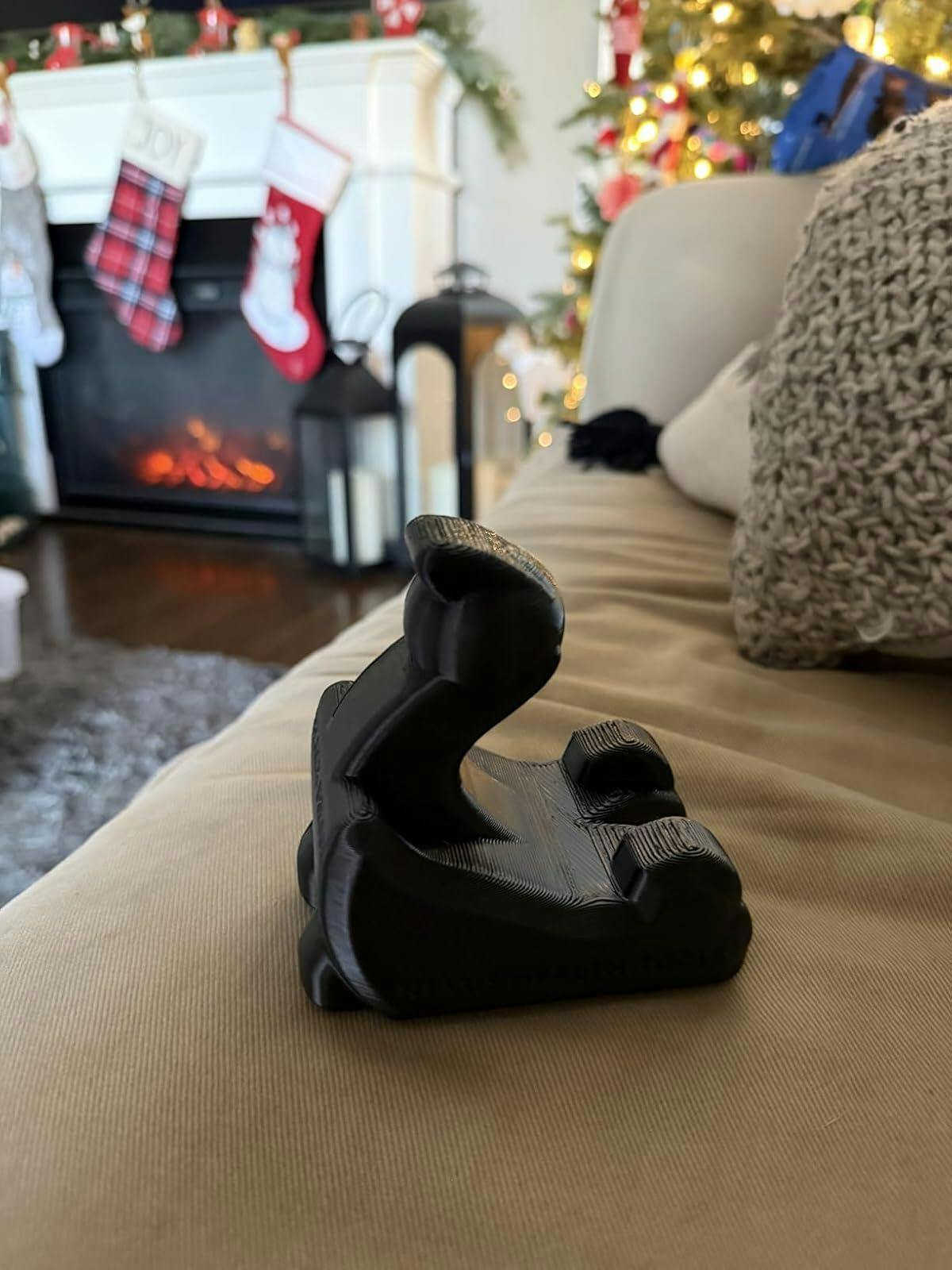
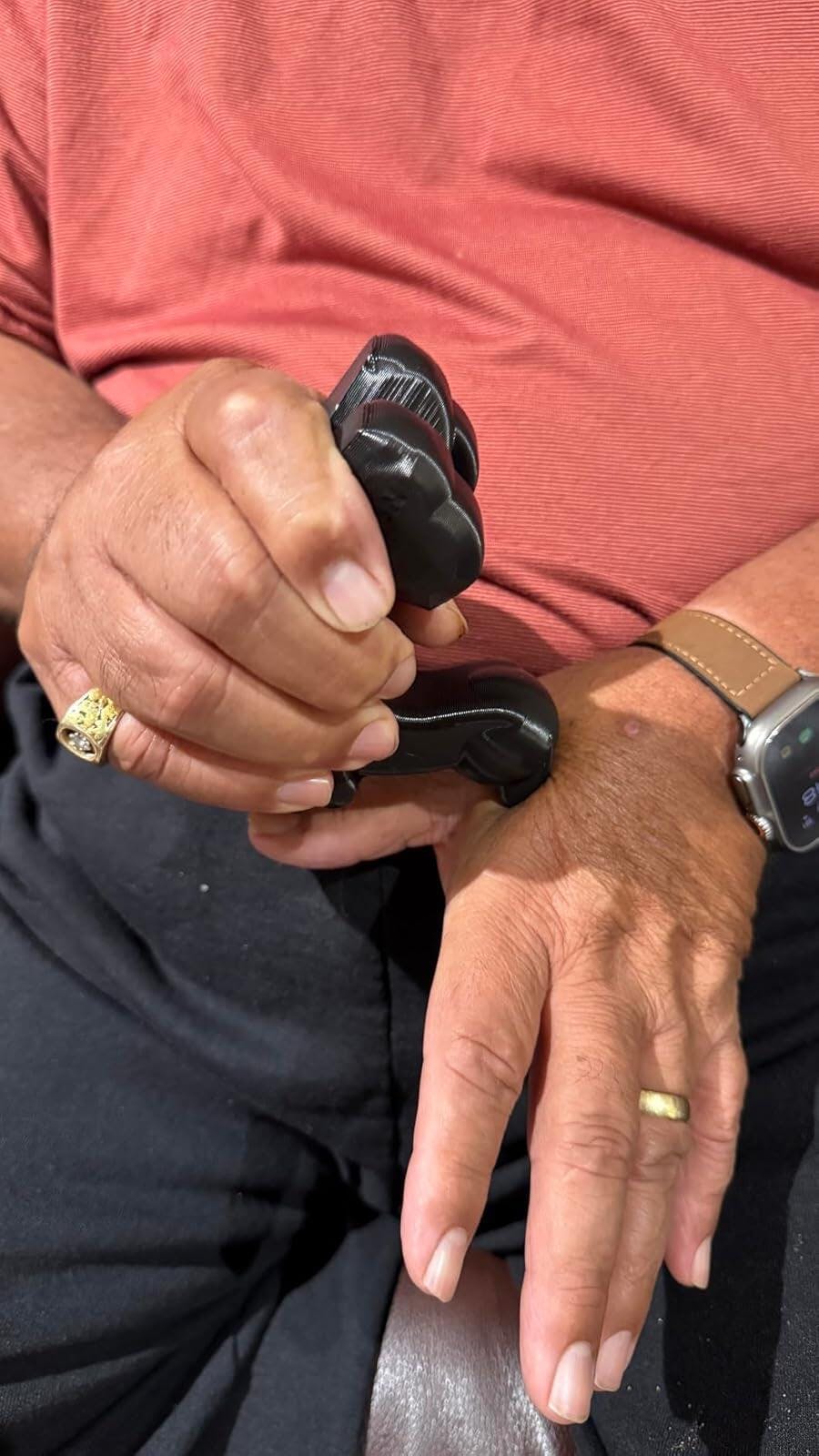
Nexus Health Tools’ Core Nexus embodies these principles with dual, purpose-built rotating tips: a broad tip for deep psoas access and a narrow curved tip for the iliacus. Its compact, all-in-one design supports professional-grade outcomes at home, offering a practical path to targeted iliacus trigger point relief, reduced psoas muscle tension, and improved postural alignment. As with any deep work, start light, move slowly, and adjust based on comfort.
The Anatomy of the Psoas and Iliacus Muscles
The iliopsoas complex—psoas major and iliacus—drives hip flexion and stabilizes the lumbar spine during standing, walking, and sitting. When these deep hip flexors shorten or become hypertonic, the pelvis tips forward, increasing lumbar lordosis and loading the SI joints. Understanding their shape, depth, and fiber direction is essential for effective use of rotating muscle release tips and for targeting anterior pelvic tilt relief.
Psoas major originates along the sides of T12–L5 vertebral bodies, discs, and transverse processes, coursing downward to the lesser trochanter. It sits deep beneath the abdominal wall and viscera with a thick, cylindrical belly that can harbor taut bands. Psoas muscle tension often refers pain to the low back, groin, and SI region. Because the psoas has broad, vertical fibers and lies adjacent to sensitive structures, pressure that distributes force across a wider surface and can gently rotate helps tissues accommodate while allowing deeper penetration toward the belly.
Iliacus lines the concave iliac fossa and fans inward under the inguinal ligament to join psoas at the lesser trochanter. Trigger points commonly form near the inner lip of the iliac crest and just medial to the ASIS, referring pain to the groin and anterior hip. The curved bony contour means a narrow, contoured contact that can follow the pelvic brim is better suited for iliacus trigger point relief without slipping off the muscle.
Practical implications for self-myofascial release tools:
- Use a broad, rounded contact for the psoas belly; a rotating interface can create micro-shearing along fibers while reducing guarding.
- Use a narrow, curved profile to trace the iliac fossa and access converging fibers beneath the ASIS.
- Apply force obliquely toward the lesser trochanter to align with fiber direction.
Nexus Health Tools designed the Core Nexus around this anatomy: dual purpose-built rotating muscle release tips—a broad tip for deep psoas work and a narrow curved tip for iliacus access—with smooth rotation that supports chronic hip pain relief and more precise anterior pelvic tilt relief.
Limitations of Static Myofascial Release Tools
Static implements like foam rollers, lacrosse balls, or fixed-tip pressure tools rely almost entirely on vertical compression. For deep hip flexors, that often means pressing into protective layers rather than mobilizing the psoas and iliacus where adhesions and tone actually live.
Common constraints with non-rotating self-myofascial release tools:
- Skin drag over tissue shear: Static pressure tends to push or bruise the surface without creating the gliding shear that helps dehydrate sticky fascia and reduce psoas muscle tension.
- Inconsistent depth and direction: Maintaining precise pressure while subtly changing vectors is difficult without a mechanism that rolls or rotates under load.
- Protective guarding: Pure compression can trigger abdominal and hip flexor guarding, making it harder to reach deeper layers and increasing discomfort.
- Bony and vascular boundaries: Navigating around the ASIS, inguinal ligament, and sensitive neurovascular structures demands refined control that static tips don’t easily provide.
- User fatigue: Generating and sustaining effective pressure at awkward angles taxes the wrists and shoulders, shortening sessions before meaningful changes occur.
Consider a common scenario: using a ball against the lower abdomen to “press into the psoas.” The ball flattens tissue, slides on skin, and meets bony edges before it can angle under the iliac crest. Users often report sharp, superficial discomfort with little change in hip extension or standing alignment—signs that deep fibers weren’t influenced enough to support chronic hip pain relief or anterior pelvic tilt relief.
Rotating muscle release tips address these gaps by converting force into controlled shear and fiber-specific motion without excessive skin drag. Nexus Health Tools’ Core Nexus integrates this approach with a broad rotating tip for deep psoas work and a narrower curved tip designed to access the iliacus’ inner contour, offering a more precise, sustainable path than static designs for those seeking targeted, professional-grade results.
The Mechanics of Rotating Tips in Deep Tissue Therapy
Rotating muscle release tips transform simple downward pressure into controlled shear and micro-mobilization. Instead of sliding across skin, a smooth arc transmits force into deeper fascial layers, letting tissues “creep” and thickeners in the matrix become more fluid (thixotropy). This helps the tool sink gradually through abdominal layers to reach the psoas and around the pelvic brim to access the iliacus—areas where straight compression alone often stalls.
Rotation also modulates nervous-system tone. Slow, low-amplitude arcs stimulate mechanoreceptors that reduce guarding, allowing deeper access with less force. The result is a safer pathway to iliacus trigger point relief and a meaningful drop in psoas muscle tension without provoking protective bracing.
Tip geometry matters. A broad, gently contoured surface distributes load over the abdomen, improving comfort while reaching the deep psoas. A narrow, curved profile fits the iliac fossa, navigating just medial to the ASIS with precise angles. Together, these shapes direct force along fiber orientation for more efficient release.
Practical examples:
- Iliacus: Place a narrow curved tip just medial to the ASIS, angle posteromedially, apply light pressure, then rotate in 10–20° arcs for 30–60 seconds while breathing slowly.
- Psoas: Start 2–3 cm lateral to the navel, angle posteriorly toward the spine, and use slow rotations on the exhale to allow progressive depth without excess compression.
For self-myofascial release tools, rotation offers mechanical advantage. Small wrist movements produce consistent torque at the tip, reducing user fatigue and maintaining precise targeting—key for chronic hip pain relief and improved pelvic mechanics.
Nexus Health Tools’ Core Nexus integrates these principles with dual, purpose-built rotating tips: a broad head for deep psoas work and a narrow curved tip for iliacus access. Its compact, all-in-one design and smooth rotation help users achieve deeper penetration with less strain, supporting anterior pelvic tilt relief and more efficient home care between sessions.
Achieving Deeper Penetration Through Rotational Movement
Rotational movement changes how force enters tissue. Instead of straight compression, a gentle twist adds shear that helps the fascia “creep” and the muscle spindle relax. This reduces guarding so the tool can sink toward the deeper layers of the psoas and iliacus with less discomfort, improving access to trigger points and stubborn psoas muscle tension.
Rotating muscle release tips also engage mechanoreceptors that respond to sustained, tangential stretch. That input can calm sympathetic tone and ease protective bracing, which is especially helpful when targeting hip flexors that contribute to chronic hip pain relief and anterior pelvic tilt relief.
Practical example sequences:
- Deep psoas: Lie supine with knees bent. Place a broad tip 2–3 finger-widths lateral to the navel, slightly inferior. On a slow exhale, allow the tool to settle, then rotate 10–20 degrees for 5–8 seconds, pause, and repeat 3–5 cycles, shifting 1–2 cm to map tenderness. Keep pressure at a tolerable 4–6/10.
- Iliacus trigger point relief: Side-lying, soften the abdomen. Position a narrow, curved tip just inside the iliac crest, angling medially along the bowl of the pelvis. Apply light pressure, then perform small, slow rotations to create shear into the iliacus. Hold and breathe for 2–3 minutes, moving along the crest.
Angle matters. The psoas is more accessible with a slightly medial and posterior vector, while the iliacus responds to a shallow, sweeping approach along the iliac fossa. Slow, low-amplitude rotations maintain friction without sliding on skin, allowing deeper penetration without excessive force common to non-rotating self-myofascial release tools.
For a purpose-built option, Nexus Health Tools’ Core Nexus pairs a broad rotating tip for deep psoas work with a narrow, curved rotating tip that contours to the iliacus. The smooth rotation helps reach tissue layers efficiently, supporting consistent at-home sessions for those managing SI joint discomfort, hip flexor tightness, and posture-related pain.
Targeting the Iliacus: Precision with Narrow Curved Tips
The iliacus sits deep on the inner surface of the pelvis, curving along the iliac fossa before joining the psoas at the lesser trochanter. Its concave path makes flat or blunt tools hard to position without pressing into sensitive structures near the inguinal region. Narrow curved tips solve this by matching the contour of the iliac bowl and directing force inward and posterior, not straight down into the abdomen.
Rotating muscle release tips add another layer of precision. Micro-rotations gently “drill” through superficial fascia, allowing the tip to sink to the iliacus with less overall pressure. This can improve iliacus trigger point relief while reducing guarding from the abdominal wall.
Practical setup and technique:
- Position: Lie supine, knees bent. Find your ASIS (front hip bone), then move one fingertip-width medial and slightly inferior.
- Tool angle: Place a narrow curved tip so it cups the inner rim of the pelvis. Aim posteromedially toward the iliac fossa, staying lateral to the femoral pulse.
- Dose: Apply moderate pressure (4–6/10). Use small rotational motions while exhaling slowly for 60–90 seconds.
- Shear lines: Glide in short arcs along the inner crest and slightly inferior toward the line of pull to the lesser trochanter.
- Re-assess: Stand and test hip extension or a gentle lunge; many notice reduced psoas muscle tension and easier upright posture.
Safety cues:
- Avoid the femoral triangle (medial/anterior). If you feel pulsing, move lateral.
- Work gradually; sharp or radiating pain means back off.
- Skip active flare-ups or recent surgeries; consult a clinician if unsure.
For users seeking self-myofascial release tools that can navigate this anatomy, Nexus Health Tools’ Core Nexus features a purpose-built narrow curved tip with smooth rotation designed for precise iliacus access. Paired with its broader tip for psoas work, it supports chronic hip pain relief and may contribute to anterior pelvic tilt relief by reducing iliacus overactivity and restoring balanced hip extension mechanics.
Addressing Anterior Pelvic Tilt and Lower Back Alignment
Anterior pelvic tilt often stems from shortened hip flexors and inhibited glutes, leaving the lumbar spine locked in extension. The psoas and iliacus, which attach to the lumbar spine and inner pelvis, can pull the pelvis forward when they’re overactive. Reducing psoas muscle tension and addressing iliacus trigger point relief helps restore neutral alignment and unload the lower back.
Rotating muscle release tips add a useful shear component that encourages the tissue to yield without provoking guarding. A broad tip distributes pressure to sink gradually through the abdominal wall toward the psoas, while a narrow, curved tip contours the iliac fossa to reach the iliacus’ fan-shaped fibers. Smooth, low-amplitude rotation stimulates mechanoreceptors, reduces tone, and allows deeper, safer penetration than static compression alone—key for anterior pelvic tilt relief.
Try this targeted sequence:
- Psoas (broad tip): Lie supine with knees bent. Place the tip 2–3 cm medial to the ASIS, angled slightly toward the spine. Apply light-to-moderate pressure and make slow quarter-turn rotations as you exhale. Spend 60–90 seconds in two to three spots from the navel to the ASIS line. Sensation should be deep and dull, not sharp or pulsing.
- Iliacus (narrow curved tip): From supine or side-lying, nestle the tip along the inner iliac crest. Sweep small arcs from the crest inward, following the bowl of the pelvis. Pause on tender bands for 20–30 seconds while breathing, then move on for progressive iliacus trigger point relief.
- Reintegrate: Follow with glute bridges, posterior pelvic tilts, and a half-kneeling hip flexor stretch to reinforce neutral pelvis. Re-test hip extension or ease of standing posture to confirm carryover.
For users who want precise control, the Core Nexus by Nexus Health Tools combines a broad psoas tip and a narrow curved iliacus tip in a compact, self-myofascial release tool with smooth rotation. Its dual, purpose-built ends help translate meticulous technique into consistent chronic hip pain relief and better lower back alignment at home.
Benefits of All-in-One Portability for Consistent Recovery
Consistency is what turns occasional relief into lasting change. An all-in-one tool with rotating muscle release tips removes friction from your routine: no attachments to hunt for, no complicated setup, and no need for a large training space. You can address psoas muscle tension or iliacus trigger point relief where you actually feel it—at your desk, after a run, or in a hotel room—so sessions don’t get skipped.
Real-world use cases:
- Desk breaks: 3–5 minutes per side to downshift hip flexor tone after prolonged sitting, helping reduce pull on the lumbar spine.
- Post-training: Quick iliacus work to restore hip extension before cooldown stretching, aiding recovery and stride mechanics.
- Travel days: Compact enough for carry-on; settle tight hips after flights with short, guided breathing and slow rotations.
- Pain flare-ups: Immediate access when discomfort spikes, rather than waiting for your next appointment.
Portability strengthens outcomes because it:
- Increases frequency: More frequent, shorter sessions compound for chronic hip pain relief.
- Enables precise repetition: Same device, same angles, same pressure cues for reliable progress.
- Supports habit stacking: Pair releases with routines (morning coffee, post-work commute) for adherence.
- Bridges care: Complements clinic-based manual work between visits using proven self-myofascial release tools.
Nexus Health Tools’ Core Nexus exemplifies this approach. Its dual, purpose-built rotating tips—broad for deep psoas access and a narrow, curved profile for the iliacus—deliver smooth, controlled rotation that penetrates tissue with less external force. The compact, all-in-one design fits in a backpack, making it easy to stay consistent while pursuing anterior pelvic tilt relief and improved postural alignment.
Tip: Breathe diaphragmatically (4–6 slow breaths per spot) and avoid bony landmarks and pulsations. Start light, progress gradually, and coordinate with your clinician to align home sessions with your plan of care.
Practical Tips for Using Rotating Tools Safely at Home
Using rotating muscle release tips at home can be safe and effective when you follow a few fundamentals. The goal is steady, controlled pressure with smooth rotation—not forcing depth.
- Screen yourself first: avoid abdominal work if you’re pregnant, have a hernia, recent surgery, active infection, severe osteoporosis, abdominal aneurysm, or are on blood thinners. When in doubt, ask a clinician.
- Warm up: 2–3 minutes of diaphragmatic breathing and gentle hip mobility (pelvic tilts, knee sways) reduces psoas muscle tension and prepares tissue.
- Positioning: lie supine with knees bent. Work at least 1–2 hours after eating. Use a small towel over the tip if sensitive.
- For psoas: locate the area just inside the front hip bone (ASIS) and slightly inferior. Avoid the midline above the navel (aorta) and the crease of the groin (femoral vessels). Use a broad tip, angle pressure slightly toward the spine, then apply low-to-moderate pressure (3–4/10) while slowly rotating to let tissues yield. Breathe in for 4, exhale for 6; on each exhale, allow a few millimeters of sink.
- For iliacus trigger point relief: trace just inside the iliac crest. Use a narrow curved tip to “sweep” along the inner rim of the pelvis. Rotate while gliding a centimeter at a time; you should feel pressure under the bone’s inner edge, not a sharp pinch.
- Dosing: 60–90 seconds per point, 2–3 points per side, 3–4 sessions weekly. Stop if you feel numbness, tingling, sharp pain, or throbbing; those can indicate nerve or vascular proximity.
- Aftercare: walk for 2–5 minutes, sip water, and perform gentle hip flexor stretches. Reinforce with core and glute activation to support anterior pelvic tilt relief.
- Hygiene: clean the tips after each use; store the tool in a dry place.
Purpose-built self-myofascial release tools help you stay precise. Nexus Health Tools’ Core Nexus combines a broad tip for deep psoas access and a narrow curved tip for the iliacus, with smooth rotation that reaches depth without excess force—ideal for chronic hip pain relief at home. Explore their guides at shop.nexushealthtools.com for setup and positioning specifics.
Conclusion: Elevating Your Recovery Routine with Advanced Technology
Rotating muscle release tips give you mechanical advantages that hands alone can’t provide: consistent pressure, controlled shear, and the ability to follow muscle fiber paths without skin drag. For deep structures like the psoas and iliacus, that means access with less guarding and more precise dosage, translating into more reliable changes in tissue tone and comfort.
A simple, effective sequence:
- Psoas: Lying supine with a soft ball under the mid‑back for support, bend the knee on the side you’re working. Place a broad rotating tip just medial to the ASIS, angle slightly toward the spine, and apply light-to-moderate pressure. Rotate slowly (quarter turns) for 45–60 seconds, then hold on the densest spot for 2–3 slow breaths to reduce psoas muscle tension.
- Iliacus: Slide a narrow, curved tip along the inner lip of the pelvic crest. Use small arcs and slow rotations for 30–45 seconds per point to encourage iliacus trigger point relief. Keep your abdomen soft and breathe diaphragmatically.
- Re-test: Stand, perform a gentle lunge or hip extension test. Note changes in stride length or ease of standing after sitting.
To integrate this with training and daily life:
- Pre‑activity: 3–5 minutes per side before walking, running, or lifting to free hip extension.
- Desk breaks: 1–2 minutes per side after prolonged sitting for chronic hip pain relief.
- Follow-ups: Pair with glute bridges or side steps and gentle hip flexor eccentrics to help maintain anterior pelvic tilt relief.
Among self-myofascial release tools, the Core Nexus from Nexus Health Tools offers dual, purpose‑built rotating tips—a broad tip for deep psoas work and a narrow curved tip designed to reach the iliacus—plus smooth rotation that helps you sink gradually without excess surface friction. Its compact, all‑in‑one design makes consistent practice easier at home or on the road.
Used with sensible breath work, progressive pressure, and strengthening of the posterior chain, rotating muscle release tips can become a reliable cornerstone in a long‑term strategy for hip mobility, postural balance, and durable relief.