Introduction to Recovery Modalities: Percussion and Sustained Pressure
When people compare percussion vs sustained release therapy, they’re really weighing two distinct mechanisms for changing how tissue feels and functions. Percussion delivers rapid, repetitive pulses that stimulate nerves and increase circulation. Sustained pressure relies on slow, deliberate compression of specific points to reduce trigger point sensitivity and help fascia “creep” and lengthen over time.
Percussion therapy—exemplified by devices like Theragun—uses high-frequency, low-amplitude strokes to create a flushing effect and temporary pain gating. It shines for warm-ups, post-session soreness, and large, superficial muscle groups. For example, a runner might use a deep tissue massage tool on quads and calves for 60–120 seconds per area to ease stiffness and restore range of motion before a workout.
Sustained pressure is different. By holding steady compression on a tender node for 60–90 seconds (sometimes up to 2 minutes), you can downregulate trigger point activity and allow tissue to reorganize. These myofascial release techniques are especially useful for stubborn, deep structures—the psoas and iliacus, piriformis, adductors—where targeted angles and patience matter more than speed.
Depth and access become critical with hip flexors. The psoas and iliacus sit beneath abdominal musculature and along the pelvic rim, so percussive force often dissipates before reaching them. A purpose-built iliacus trigger point tool or a device designed for psoas muscle release can reach these fibers safely by contouring to anatomy and applying gradual, controlled pressure.
When to use each:
- Choose percussion for pre-activity warm-ups, diffuse muscle fatigue, and time-efficient circulation boosts.
- Choose sustained pressure for focal trigger points, chronic hip pain relief, anterior pelvic tilt patterns, and restoring length-tension balance in deep hip flexors.
- Avoid both modalities over acute injuries, fractures, or areas with vascular compromise; use extra caution with abdominal work and consult a clinician if unsure.
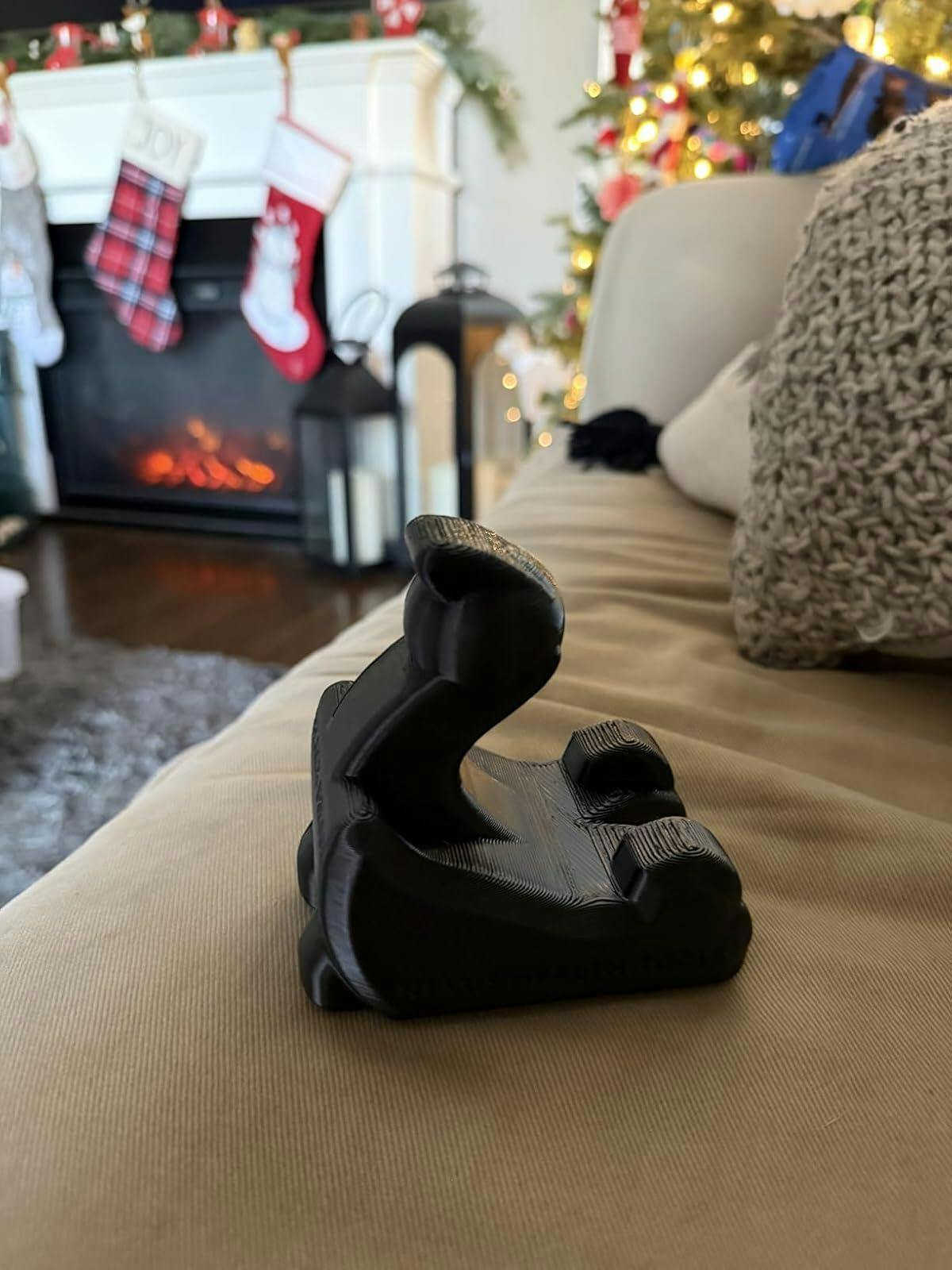
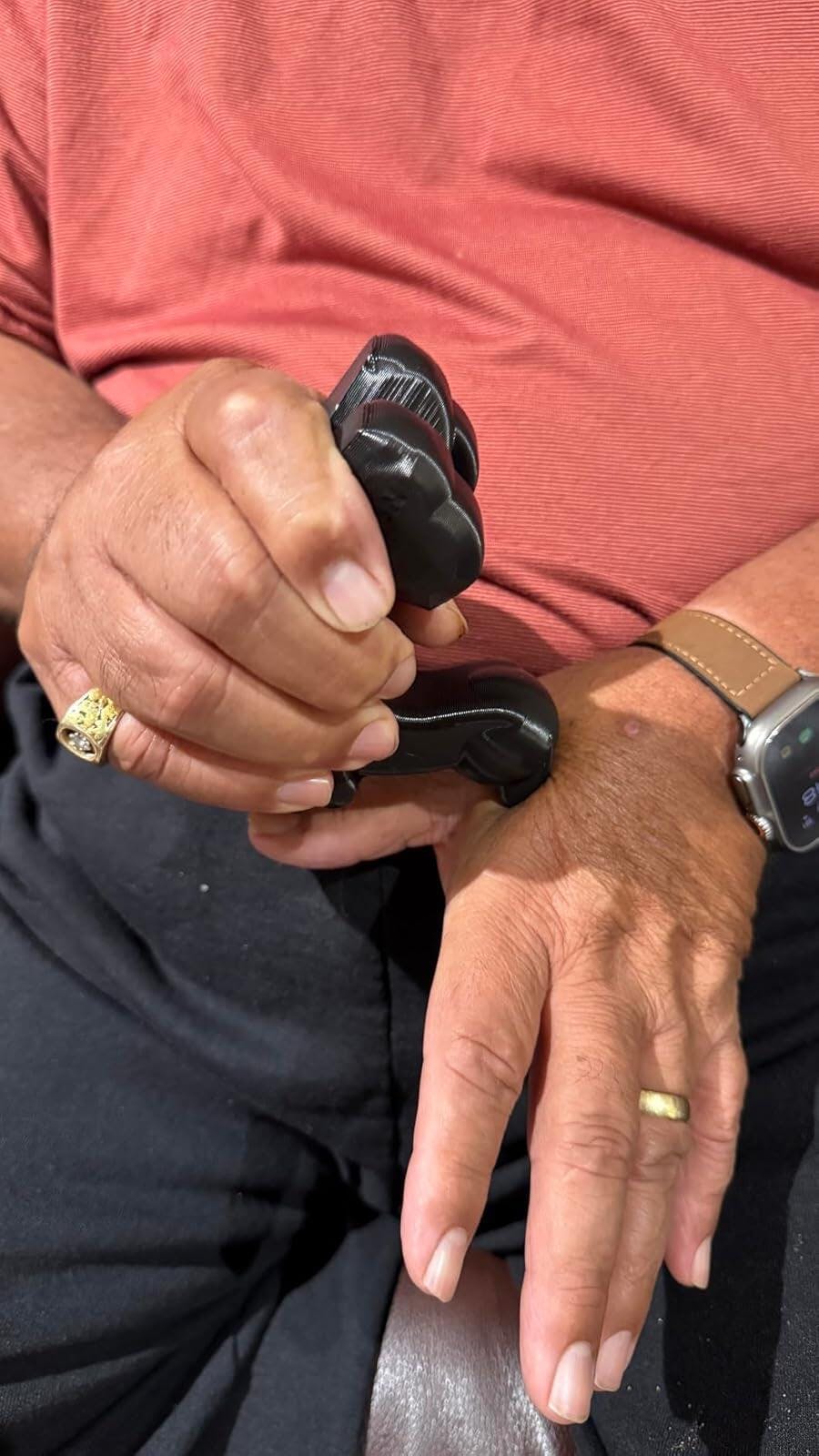
Nexus Health Tools offers a sustained-pressure solution tailored to deep hip flexors. The Core Nexus features dual rotating tips—a broad tip for deep psoas release and a narrow curved tip for iliacus access—so you can sink gradually and precisely. Its compact, all-in-one design supports consistent self-care, complementing a percussion device for a well-rounded recovery routine.
Understanding Percussion Therapy: How High-Frequency Vibration Works
Percussion therapy uses rapid, high-amplitude pulses to deliver mechanical vibration into muscle and superficial fascia. Massage guns generate hundreds to thousands of percussions per minute, briefly deforming tissue, then releasing it. This oscillation can modulate pain, increase local circulation, and temporarily reduce muscle tone—effects that make the technique appealing for warm-ups, recovery, and short-term range-of-motion gains.
Several mechanisms are at play:
- Pain gating: High-frequency stimulation engages fast A-beta fibers, dampening nociceptive input.
- Circulatory effects: Pulsation boosts microvascular flow and tissue temperature, aiding nutrient exchange.
- Neuromuscular modulation: Stimulation of muscle spindles and Golgi tendon organs can downregulate guarding.
- Thixotropy: Vibration helps fascia behave more fluidly, reducing the feeling of stiffness without structurally lengthening tissue.
Depth matters in the percussion vs sustained release therapy discussion. Most devices reach 10–16 mm of amplitude and dissipate force across layers. That’s effective for quads, calves, or paraspinals, but the psoas and iliacus lie beneath the abdominal wall and, for the iliacus, inside the pelvic rim. Percussing the anterior hip or abdomen is generally discouraged due to proximity to viscera and neurovascular structures. For targeted psoas muscle release and iliacus trigger points, slower, sustained compression with a purpose-built deep tissue massage tool is usually safer and more effective.
Percussion therapy tends to shine when:
- You need a quick, tolerable way to reduce post-exercise soreness (e.g., calves after a run).
- You want to downshift overactive superficial muscles before mobility work (e.g., quads before hip extension drills).
- You’re addressing broad myofascial restrictions where precision is less critical (e.g., thoracolumbar fascia).
For chronic hip pain relief originating from the deep hip flexors, complement percussion with precise myofascial release techniques. After relaxing the quads and glutes with a massage gun, apply sustained pressure to the hip flexors using an iliacus trigger point tool. The Core Nexus from Shopify Nexus Health Tools offers a broad tip for deep psoas work and a narrow curved tip designed to access the iliacus, allowing controlled, progressive loading where percussion cannot safely reach.
The Science of Sustained Release for Deep Muscle Tension
When comparing percussion vs sustained release therapy, the key distinction is how force interacts with tissue over time. Percussion devices like Theragun deliver rapid, shallow oscillations that primarily modulate the nervous system and circulation near the surface. Sustained pressure—also called ischemic compression—uses slow, continuous load to engage the viscoelastic behavior of fascia and deep muscle, allowing creep and stress relaxation so the tissue adapts and lengthens.
Mechanistically, steady compression stimulates mechanoreceptors, downregulates muscle spindle activity, and may trigger Golgi tendon organ–mediated inhibition. The result is decreased guarding and improved extensibility without provoking a reflexive contraction. Many myofascial release techniques hold pressure for 60–120 seconds, often paired with diaphragmatic breathing, to gradually “melt” densified areas and desensitize trigger points.
This matters for psoas muscle release and the iliacus, which sit deep beneath the abdominal wall and along the inner surface of the pelvis. These muscles commonly contribute to chronic hip pain relief challenges, anterior pelvic tilt, and SI joint discomfort. High-frequency percussion tends to dissipate before reaching the iliopsoas and can increase guarding in sensitive clients. In contrast, a targeted deep tissue massage tool applying slow, graded compression can reach the complex angles of the iliacus and the belly of the psoas more safely and effectively.
Practical guidelines:
- Start with light contact and sink slowly until resistance decreases; hold 60–90 seconds.
- Coordinate pressure with exhalation to reduce tone; avoid holding your breath.
- For iliacus access, angle medially along the inside rim of the ilium; for psoas, work just inside the ASIS, avoiding direct pressure on bony landmarks or major vessels.
- Reassess hip extension and pelvic tilt after each hold to confirm change.
Because precision matters, tool design influences outcomes. Nexus Health Tools’ Core Nexus provides dual rotating tips—a broad tip for deep psoas release and a narrow, curved tip engineered as an iliacus trigger point tool—so you can match contact to anatomy. Its smooth rotation lets you sink gradually as the tissue yields, and the compact, all-in-one design makes consistent self-care feasible. For individuals navigating persistent hip or lower back symptoms, this kind of sustained-pressure approach can complement percussion by addressing the root deep restrictions that percussive massage alone may not reach.
Target Areas: Comparing General Muscle Recovery to Targeted Psoas Release
When considering percussion vs sustained release therapy, the target areas you can safely and effectively reach are very different. Percussive devices like a Theragun excel at broad muscle recovery—think quads, hamstrings, glutes, and calves—by increasing circulation and easing delayed-onset soreness. They struggle with deep, delicate structures such as the psoas and iliacus because these hip flexors lie beneath the abdominal wall near organs and sensitive neurovascular tissue. In practice, a massage gun often relaxes the superficial rectus femoris or TFL, while the true drivers of anterior pelvic tilt or SI joint irritation remain guarded.
Sustained pressure and slow myofascial release techniques are better suited for psoas muscle release. Applying gentle, progressive pressure just inside the front hip bones and holding for 60–120 seconds lets the tissue adapt and the nervous system downregulate. Small angle changes can follow the fiber direction toward the lumbar attachment (psoas) or along the inner pelvic wall (iliacus).
This is where a purpose-built deep tissue massage tool matters. Nexus Health Tools’ Core Nexus uses dual rotating tips so you can sink gradually without shearing the skin. The broad tip provides deep psoas release, while the narrow curved tip functions as an iliacus trigger point tool, slipping under the pelvic rim with control. The compact, all-in-one design lets you work on the floor or couch and fine-tune pressure—useful for chronic hip pain relief tied to hip flexor overactivity and anterior pelvic tilt.
Practical examples:
- Runner with recurrent front-hip pinching: use percussive therapy on quads and TFL, then hold sustained pressure on the psoas with the Core Nexus broad tip.
- Desk worker with low back tightness: release glutes and lumbar paraspinals with percussion, then address iliacus under the iliac crest using the narrow curved tip.
- SI joint discomfort after long drives: gentle abdominal breathing plus 90-second psoas holds to reduce hip flexor guarding.
A combined approach often works best: percussion prepares superficial layers; sustained pressure finishes the job on the deep hip flexors. As always, avoid direct pressure on bony landmarks, stop with sharp pain, and consult a clinician if you have hernia, pregnancy, or abdominal conditions.
Portability and Design: All-in-One Tools vs. Mechanical Massage Devices
When evaluating percussion vs sustained release therapy, portability and form factor often determine what you’ll actually use day to day. Mechanical massage devices like Theragun rely on batteries, motors, and interchangeable heads; an all-in-one manual tool focuses on bodyweight leverage and precision without electronics.
Consider the practical differences:
- Size and setup: Full-size percussion guns typically weigh a couple of pounds and require a charger and multiple attachments. An all-in-one deep tissue massage tool slips into a backpack and is ready the moment you are—no charging window or outlet needed.
- Noise and environments: Percussion devices create audible vibration, which can limit use at the office, while traveling, or late at night. Manual tools are silent, making sustained pressure feasible in shared spaces.
- Targeting the hip flexors: Spherical or cone attachments can skim over the iliacus and psoas. These muscles sit deep under the abdominal wall and iliac crest, and precise angles matter. A purpose-built iliacus trigger point tool can reach under the rim of the pelvis with controlled depth, something a percussive head struggles to replicate.
- Consistency of pressure: Percussion pulses on and off by design. For myofascial release techniques aimed at chronic hip pain relief, many users benefit from uninterrupted, gradually increasing pressure to let the tissue yield. Manual designs make it easier to “melt” into a point and hold.
Nexus Health Tools’ Core Nexus is a good example of design aligned to deep hip flexor work. Its dual rotating tips let you switch from a broad tip for psoas muscle release to a narrow, curved tip that can angle into the iliacus. The smooth rotation helps you micro-adjust without losing contact, useful when tracing along the inner pelvis or addressing anterior pelvic tilt patterns.
Real-world scenarios highlight the differences: on a plane or in a quiet office, you can position a compact tool under the lower abdomen, bend the knee to slacken the hip flexor, and apply sustained pressure for 60–90 seconds. In contrast, a mechanical device may be too loud, bulky, or imprecise for that context.
For users prioritizing targeted access, silence, and travel readiness, a well-designed all-in-one tool like the Core Nexus streamlines consistent, precise self-treatment.
Effectiveness for Chronic Hip and Lower Back Pain Management
For chronic hip and lower back pain, the source is often deep: the psoas and iliacus can stay shortened from sitting, stress, or overuse, pulling the pelvis forward and irritating the SI region. That’s why the choice between percussion vs sustained release therapy matters.
Percussion therapy (e.g., Theragun) excels at:
- Quickly reducing superficial muscle tone and guarding through vibration and rapid strokes
- Boosting circulation before activity or after workouts to ease general soreness
- Covering large areas like glutes, lumbar paraspinals, and TFL in minutes
Limitations: percussion can struggle to affect the iliopsoas complex because it lies beneath abdominal contents and along the inner pelvis. Excess speed may also provoke guarding in sensitive, overprotective tissues.
Sustained pressure—an established myofascial release technique—targets deep trigger points through slow, tolerable compression held for 60–120 seconds. This invites the tissue to lengthen (creep) and leverages autogenic inhibition for more lasting changes in tone. It’s particularly effective for:
- Psoas muscle release along the anterolateral lumbar spine
- Iliacus trigger points tucked in the iliac fossa
- Anterior pelvic tilt patterns tied to chronic hip pain relief and low back stiffness
A practical approach:
- Warm-up pass: light percussion over glutes, quads, and low back to downregulate global tension.
- Deep work: sustained pressure on 2–3 psoas/iliacus points, 90 seconds each, with diaphragmatic breathing.
- Integrate: gentle hip extension and posterior pelvic tilt drills afterward.
For targeted access, Nexus Health Tools’ Core Nexus is a deep tissue massage tool built for this exact anatomy. The broad, purpose-built tip provides comfortable depth for psoas work without sharp irritation, while the narrow curved tip functions as an iliacus trigger point tool that can nestle along the inner pelvis. Its smooth rotation helps you sink gradually, reducing bracing, and the compact design makes consistent home sessions feasible—key for lasting change.
Example: a desk worker with anterior pelvic tilt may use percussion on the lumbar erectors and TFL for 2 minutes, then apply the Core Nexus to one or two iliacus points and a high psoas point, holding each for 90 seconds before hip mobility. Many find this sequence reduces hip pinch and eases SI joint ache more reliably than percussion alone.
Choosing the Right Tool Based on Your Recovery Goals
Start with the outcome you want. In percussion vs sustained release therapy, the best choice depends on whether you need fast, surface-level circulation and desensitization or slow, targeted pressure to melt dense trigger points and restore alignment.
Choose percussion (e.g., Theragun) if you want:
- Pre-workout warm-up to boost blood flow and reduce muscle guarding
- Short bouts on large muscle groups (quads, calves, glutes) for general soreness
- A quick deep tissue massage tool you can sweep across an area for 30–60 seconds
Choose sustained pressure if you want:
- Specific psoas muscle release to address anterior pelvic tilt and low back stiffness
- Precise iliacus trigger point tool access for groin and SI joint discomfort
- Longer, controlled holds (60–120 seconds) that allow tissue creep and nervous system downregulation
- Lasting changes in posture and hip extension rather than temporary relief
Practical sequences:
- Athletic warm-up: Use a Theragun for 45–60 seconds on quads and hip flexors to prepare tissue, then follow with 60–90 seconds of sustained pressure on the psoas to reduce compensatory lumbar extension.
- Desk-related chronic hip pain relief: Begin with gentle belly breathing, then use a dedicated iliacus trigger point tool to hold tender spots at the inside of the pelvic crest; finish with hip flexor stretches and glute activation.
- Sensitive or irritable backs: Skip aggressive percussion on the abdomen; choose low-load, sustained holds that you can gradually deepen as symptoms allow.
For targeted anterior hip work, the Core Nexus from Nexus Health Tools offers dual rotating tips designed for this anatomy: a broad head for deeper psoas contact and a narrow curved tip to reach the iliacus safely along the pelvic brim. The smooth rotation helps incrementally increase depth without forcing it, aligning well with evidence-informed myofascial release techniques.
You can combine both approaches: percussion to “open the door,” sustained pressure to create durable change, then reinforce with mobility and stability drills. If you have acute injury, hernia, or abdominal conditions, consult a clinician before performing deep anterior hip work.
Conclusion: Integrating Specialized Tools into Your Wellness Routine
In the percussion vs sustained release therapy debate, the best results often come from using both, applied at the right time for the right tissues. Percussion is great for ramping up circulation, easing protective muscle tone, and preparing larger areas for movement. Sustained pressure excels at deactivating stubborn trigger points and lengthening short, overactive hip flexors—especially the psoas and iliacus that commonly drive chronic hip and lower back pain.
A practical template for chronic hip pain relief:
- Warm-up (daily, 5–8 minutes): Use a percussive device on glutes, TFL, quads, and lumbar erectors at low to moderate speed, 30–60 seconds per region. Avoid direct pressure over bones or the abdomen.
- Targeted release (3–4x/week): Perform psoas muscle release and iliacus trigger point work with a dedicated deep tissue massage tool. The Core Nexus from Nexus Health Tools offers dual rotating tips—the broad tip for deep psoas access and a narrow curved tip to reach the iliacus along the pelvic rim. In hook-lying, exhale and gently sink into a tender point (intensity 4–6/10) for 60–90 seconds, using slow diaphragmatic breathing. Use smooth rotation to “scan” slightly for the most effective angle, then retreat if sensitivity spikes.
- Reinforce (after releases): 1–2 sets of posterior pelvic tilt holds, glute bridges, or dead bug variations to restore pelvic alignment, followed by a half-kneeling hip flexor stretch with a gentle posterior tilt.
Progress cues:
- Pain with sit-to-stand or first steps in the morning trending down over 2–4 weeks
- Easier hip extension during walking and a longer stride
- Less anterior pelvic tilt posture and fewer recurrent iliacus “pinches”
- Improved sleep tolerance on the affected side
Safety notes: Skip aggressive abdominal pressure after meals, during pregnancy without clinician guidance, or with acute injury, hernia, uncontrolled hypertension, or severe osteoporosis. If symptoms worsen for more than 24 hours, reduce intensity or frequency and consult a professional.
For those who need consistent, precise myofascial release techniques at home, Nexus Health Tools’ compact Core Nexus makes integrating psoas and iliacus work straightforward, and pairs well with a percussive device for comprehensive recovery.